Bible Stories Vs Bible Events
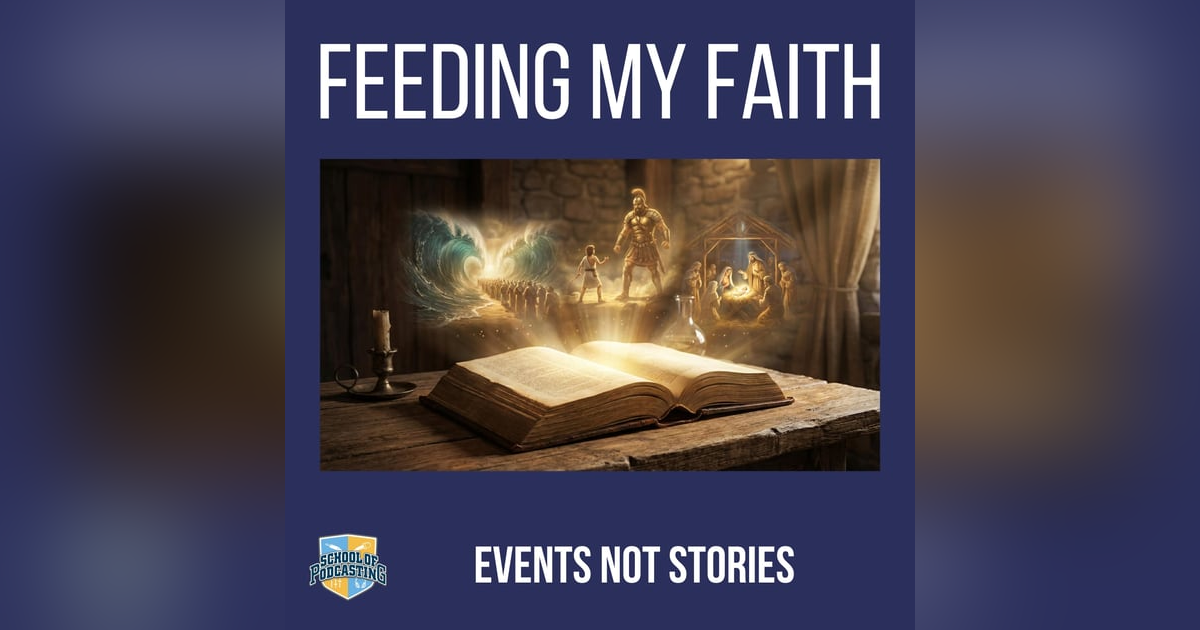


Let’s get real for a moment: the Bible is more than just bedtime stories. It’s a collection of events that have shaped the world, and we’re here to explain that!
From the archaeological finds that confirm places and people mentioned in the scriptures to the way words have changed over time, it’s a fascinating discussion.
We’re breaking down how skeptics view the Bible and flipping the script to show how believers can find confidence in their faith.
With evidence from real-life digs that link back to biblical accounts, we’re painting a picture that not only supports the truth of the scriptures but also encourages us to stand firm in our beliefs. So, whether you're a skeptic or a believer, there's something in here for everyone, and it’s going to be a fun ride!
Takeaways:
- When reading Bible stories to kids, remember they're not just tales, they're real events!
- The Bible is filled with historical events, not just stories, which makes it super important.
- Words in the Bible can change meaning over time, so keep an eye on that!
- Skeptics might see the Bible as a mix of myth and history, but there's more to it!
- Archaeological findings like Pontius Pilate's inscriptions prove the Bible's historical roots.
- Reading the Bible with kids is about sharing real events, not just fairy tales.
Links referenced in this episode:
If you've received value from this show, feel free to help me continue and give some of that value back.

00:00 - Untitled
00:28 - Understanding the Bible: More Than Just Stories
02:25 - The Archaeology of Belief
08:08 - Archaeological Discoveries of Biblical Significance
15:07 - The Prophecy of the East Gate
17:20 - The Prophecy of the Mount of Olives
The next time you sit down with one of those books with all the colorful pictures to read some Bible stories to your children or your grandchildren or your great grandchildren, there is one word I want you to add when you're talking about Bible studies.
Speaker ABecause, you see, the Bible is filled with more than stories.
Speaker AIt's filled with events.
Speaker AWe're going to talk about that today.
Speaker AAll right?
Speaker ASo first things first, I gotta say I'm gonna use the word if a lot today.
Speaker AAnd the thing I love about my Christians brothers and sisters is some of them get a little flustered when you start saying if.
Speaker AAnd I'm going to start off with a weird story.
Speaker AAnd that is my very first home I owned.
Speaker AI did a lot of, you know, projects with that.
Speaker AAnd one was my neighbor, who next door was this super fit firefighter guy.
Speaker AAnd he talked me into putting up a fence.
Speaker ABut instead of buying, you know, sections of fence, we decided to do it from scratch.
Speaker AAnd we're digging the holes and all that stuff.
Speaker AAnd in the back left corner of my yard, so right next to a garage, there was just this weird pile of dirt that was taller than everything else, and we could not put any post holes in it.
Speaker AAnd so I grabbed a shovel, I grabbed a bunch of stuff, and I started digging through this weird hard section of my yard.
Speaker AAnd I found shoes.
Speaker AYeah, I found bags of trash.
Speaker AAnd apparently at one point, that back corner of my yard was a fire pit.
Speaker AI found a bunch of bricks in a circle buried, I don't know, three inches in the dirt, where somehow somebody just, I don't know, just threw a bunch of dirt on top of it and kept on going.
Speaker AAnd so that's one thing we're going to talk about archeology today, and then the other thing I want to talk about are words.
Speaker AAnd so today I kind of hinted, you know, we talk about Bible stories.
Speaker AMaybe we should kind of remind people we're talking about Bible events because words change and they have different meanings.
Speaker ALike clue.
Speaker AThe word clue.
Speaker AFor some of you, you're thinking of a board game, but we often say, you know, get a clue.
Speaker AWell, that used to mean a ball of yarn, because you would use the ball of yarn to kind of draw your way back if you're going through a maze of some sort of the word nice.
Speaker AWell, that used to mean stupid or ignorant, which brings a whole new light the next time you go, oh, he's so nice.
Speaker ABecause now it means kind.
Speaker AAnd so I wanted to know, what do atheists think about the Bible?
Speaker AAnd the other Thing we should.
Speaker ASpeaking of words, they're not atheists anymore.
Speaker ANow they're skeptics and that's fine.
Speaker ABut most non believers, if we want to even go that route, most skeptics would say the Bible was written, edited and compiled by people over centuries, reflecting their beliefs, their politics and their conflicts.
Speaker AAnd they usually see it as a mix of myth, legend, law codes, wisdom, sayings, letters and community stories, similar to other ancient religious texts.
Speaker ABut again, when you sit down to read to your children, your grandchildren, your nieces, your nephews, you are reading to your kids, right?
Speaker AThat seems to be lost, but you should.
Speaker AOne of my earliest memories, I don't even remember who it was.
Speaker AIt was somebody in a red and gray flannel shirt was reading to me in my grandmother's bedroom.
Speaker AThat's literally one of my earliest memories.
Speaker AI believe it was my grandpa, but he died when I was three.
Speaker ASo keep that in mind.
Speaker ABut the bottom line is the Bible happened.
Speaker AThe Bible straight up happened.
Speaker AAnd you're like, really?
Speaker AWell how?
Speaker AWell, it mentions Jerusalem, it mentions Egypt, it mentions Rome, it mentions Ephesus, better known as Turkey today.
Speaker AAnd you're like, okay, Dave, but they could have written about that.
Speaker AYou know, those cities have been around for years.
Speaker AThey could have just made that part of the story.
Speaker ABut for years people thought, yeah, these are just stories because there was no real kind of anything permanent that pointed to Pontius pilate.
Speaker AAnd in 1961, they found a limestone block naming Pontius Pilate as the prefect of Judea.
Speaker AAnd this was in Latin.
Speaker AOkay, so what?
Speaker AWell, that confirms he was a real Roman governor.
Speaker AAnd that matches the Gospel description of the man who condemned Jesus.
Speaker ASo keep that in mind.
Speaker AThen I didn't even really know about this because it's in 2 Kings.
Speaker AIt's the Old Testament.
Speaker AAnd I mean, the Old Testament is cool, but there was Hezekiah's tunnel.
Speaker AAnd I'm going to butcher a lot of names today.
Speaker ASiloam, there was an inscription.
Speaker ASo what are you talking about, David?
Speaker AWell, first things first.
Speaker ALet's go biblical.
Speaker AIn 2 Kings, verse 20, it says, as for the other events of Hezekiah's reign, all of his achievements and how he made the pool and the tunnel by which he brought water into the city.
Speaker ASo it mentions this tunnel.
Speaker AWell, they found it.
Speaker AThere is a hand cut water tunnel with an ancient Hebrew inscription describing how two teams kind of set out, one from one end and one to the other.
Speaker AAnd they did radiocarbon dating which places it around.
Speaker AYep, 700 BC right in the timeline of the Bible.
Speaker AAnd so 2 Chronicles also mentions King Hezekiah redirecting water into Jerusalem before basically they got taken over.
Speaker ASo same place, same purpose, same period.
Speaker AIt's there.
Speaker AAnd so I mentioned the pool of siloam in Isaiah 22:11.
Speaker AHe says, you build a reservoir between two walls for the water of the old pool.
Speaker AAnd they found it in 2004.
Speaker AIt's a large step pool unearthed with coins from the Hasmonean.
Speaker AHasmonean, yeah, period through Pontius Pilate again and the Jewish revolt, plus a paved street leading up to the Temple Mount, which goes with again, the Bible, where they would talk about going to the pool and then going to the temple.
Speaker ASo it's a fit with John's pool of Siloam and the ritual and the pilgrimage route to the temple in Jesus time.
Speaker AAnd this was also the pool where Jesus told the blind man he rubbed mud in his eye.
Speaker AWhich is always kind of weird when you read that story, here's mud in your eye, kid, you know, and then he goes, go wash your face in that pool.
Speaker AWell, they found it.
Speaker AOkay.
Speaker AThere's another pool, the pool of Bethsaida.
Speaker AIt's two adjacent pools.
Speaker AThey found this in the 19th century with a dividing wall forming five porches.
Speaker AAnd there was a copper scroll that they found and it mentions the House of Two Pools.
Speaker AAnd again, it directly support John 5.
Speaker AIt's a detailed description of a pool with five porches.
Speaker AAnd many people said, well, that's impossible in the past.
Speaker AAnd it's like, nope, it's right there.
Speaker AAnd Capernaum, this is really kind of a home base for Jesus ministry.
Speaker AHe did a lot of things there.
Speaker AAnd so they found a first century Blackstone synagogue.
Speaker ANow where do they find it?
Speaker ABeneath a later marble one.
Speaker ASo they found a church under a church.
Speaker AThen when you read that, you're like, huh?
Speaker ATo which I go, look, I found a fire pit underneath a bunch of trash, underneath a bunch of shoes, you know, in my yard.
Speaker ASo, yeah, apparently we just build on top of stuff.
Speaker AAnd they found this house, just a simple house under this octagonal church with a lot of very early Christian graffiti with Jesus name.
Speaker AAnd it had Peter's name on it.
Speaker AAnd it fits the Gospel's picture of Capernaum, right?
Speaker AAs again, Jesus base of ministry with a synagogue where he taught and a house basically that they now believe because it also had Peter's name in it.
Speaker ASo they found Peter's mom's house, and that's the one where they cut a hole in it and lowered people down and there's all sorts of graffiti all over it in some sort of language that I don't know.
Speaker ABut they've concluded that, yeah, this was Peter's house.
Speaker AAnd what's interesting is there comes a time when it's getting to the end of the Jesus ministry and he's calling out all these cities because here he did all these miracles in that city and it didn't really turn their heart around.
Speaker AAnd he says, andrew Capernaum, will you be lifted to the heavens?
Speaker ANo, you'll go down to Hades.
Speaker AAnd that's in Matthew 11:23.
Speaker AAnd in 749 A.D. basically an earthquake took that city out and it was deserted for a very, very long time until people came back and they built on it.
Speaker AAnd now it's a giant archaeological park.
Speaker AAnd so when I go, wait, how do you have a church on top of a church?
Speaker AAgain, little earthquake, you come back, bunch of rubble, just start building on top of stuff.
Speaker AThey didn't have bulldozers back then.
Speaker AAnd then another thing people have said is, well, if the Sea of Galilee was this, you know, all these guys are fishermen, how come there's no relics of boats anywhere?
Speaker AWell, they found one in 1986.
Speaker AIt's a 27 foot wooden boat.
Speaker AYou know, they had to kind of pieces parted together.
Speaker AThey radiocarbon dated it.
Speaker ASo all the scientists are like, well, let's run a test on it.
Speaker AAnd again to about 40 AD and it was capable of holding roughly 15 people.
Speaker ASo that confirms the type and the scale of kind of the fishing or the transport boats used on the Sea of Galilee in Jesus area, which matches again that gospel setting.
Speaker AAnd there is another, it is a cylinder.
Speaker ASo you remember, you've probably seen in history back in the, I don't know, the 1900s, 1800s, you know, have like a player piano that's like a cylinder.
Speaker ABut they found this in 1879 where Cyrus of Persia decrees the return of the exiled Jews.
Speaker AIt's like right there.
Speaker AAnd again it lines with the biblical account of the Babylonian exile and Cyrus allowing the Jews to return.
Speaker AAnd this is in Ezra, it's in Isaiah, it's in 2 Chronicles.
Speaker AThey found it.
Speaker AIt's like right there.
Speaker AAnd then another one.
Speaker AThis one isn't quite as rock solid, but it does make you go, hmm.
Speaker AAnd that is Sodom and Gomorrah.
Speaker ASo in that same kind of region, archaeologists have found two cities that have 30 inches.
Speaker ASo if you are somewhere, if you are not driving, like kind of put your hands out and figure out how many inches is 30.
Speaker AYeah, 30 inches of ash.
Speaker AAnd they can see where bricks have almost melted.
Speaker ABones have just been obliterated.
Speaker AAnd there is two cities that have.
Speaker AAs you dig down, you're like all of a sudden, out of nowhere, you got 30 inches of ash.
Speaker AAnd they say that to get that kind of just destruction, the temperature would have been around somewhere like 1100 degrees.
Speaker AAnd the Bible says it was, you know, all sorts of fire and all sorts of stuff rained from above.
Speaker AAnd there also a lot of evidence of a pretty nasty earthquake that took that whole place out.
Speaker AOkay, now here's the one that I was like, this is interesting.
Speaker AAnd that is Jesus in Ezekiel 43.
Speaker A4.
Speaker AThere are a couple different things here.
Speaker AIt says this is from Ezekiel.
Speaker ASo he's kind of prophesying, right?
Speaker AHe says, the glory of the Lord entered the temple through the gate facing east.
Speaker AThen the Spirit lifted me up and brought me into the inner court.
Speaker AAnd.
Speaker AAnd the glory of the Lord filled the temple in Zechariah 14:4.
Speaker AAgain, another prophecy says that in the day the Lord comes to fight for Jerusalem, his feet will stand on the Mount of Olives, which faces Jerusalem on the east, and the Mount of Olives will split in two.
Speaker ASo they're kind of in Jesus when he was on the Mount of Olives, right?
Speaker AThis is in Matthew 24:3.
Speaker AAs Jesus was sitting on the Mount of Olives, the disciples came to him privately and said, when is this stuff going to happen?
Speaker AWhat will be the sign of your coming and the end of the age?
Speaker AWell, here's the thing.
Speaker ASo all these prophecies are talking about how Jesus is going to come back to the Mount of Olives and he's going to enter through the temple, which you can see if you're on the Mount of Olives, and he's going to come through the east door.
Speaker AWell, there's a problem.
Speaker AThat entrance has been bricked up.
Speaker AYeah.
Speaker AThere was a guy named Sultan Suleiman.
Speaker AHe conquered Jerusalem in 1517.
Speaker AAnd he's an Islamic guy, and he had fear of the future Messiah coming because everybody, apparently in the Jewish community, they all know Ezekiel 43.
Speaker A4 and.
Speaker AAnd Zechariah.
Speaker ASo he was a little worried about this specific prophecy.
Speaker AAnd he said, all right, I'll fix that.
Speaker AAnd he bricked up the east gate.
Speaker ALike, you go there and you're like, wait, it's just this.
Speaker AYou can see where it was, but now it's just all bricked up.
Speaker AWell, here's the fun thing.
Speaker AIn 1964, there were a ton of news stories about this.
Speaker AThere was a Jewish crew that wanted to build a hotel on the top of the Mount of Olives.
Speaker AWell, to do that, you have to get a geological survey.
Speaker AAnd so they order it, it gets done.
Speaker AThey're going to build this hotel on the top of this historic mountain.
Speaker AWell, they discover that there's a fault line, you know, for earthquakes, and it runs right underneath the Mount of Olives.
Speaker AIt is an east to west fault line that runs right from the top of the Mount of Olives right to the east.
Speaker AAnd when Jesus returns, he will descend on that mountain.
Speaker AAnd I think what's going to happen is the Bible talks about earth and heavens being shaken.
Speaker AI think that in the fulfillment of this prophecy, the whole valley is just going to do that, and it's just going to have this massive earthquake, and all the stones that good old Sultan Suleiman put in front of that are going to fall right out, and Jesus is going to walk right through that gate and stand on the Temple Mount and like, all right, I told you, and I know some of you might go, yeah, the Bible.
Speaker AOkay, got it.
Speaker ABut what about Noah's Ark?
Speaker AAnd just remember one word.
Speaker ANobody's ever found it yet.
Speaker AAnd it may just be that it's long rotted away or been reused for lumber.
Speaker AThat doesn't make Genesis 6, 9 less true.
Speaker AIt means the ark did its job and then just returned to dust just like everything else.
Speaker ASo there's plenty of evidence that the Bible is not filled with just stories.
Speaker AIt's filled with events.
Speaker AAll right, Dave, so what?
Speaker AWell, and this is where, again, if the scripture is true, then every promise about Christ, finished work about forgiveness, about eternal life is solid.
Speaker AIt's not wishful thinking.
Speaker AYou know, doubts about, well, did God really forgive me?
Speaker AThose shrink because your confidence rests on God's character and promises, not your emotions.
Speaker AIf the Bible is true, then whoever believes in him has eternal life is not just some sort of hallmark sentiment.
Speaker AIt's a legal verdict from the judge of the universe.
Speaker AIf the Bible was fully true, then God's presence in suffering, his.
Speaker AHis sovereignty and the hope of resurrection.
Speaker AThe hope of resurrection are objective realities, not just coping mechanisms.
Speaker AThat gives believers courage in cancer, in grief, in persecution, and even death.
Speaker ABecause their hope rests on the resurrected Christ, not on optimism.
Speaker AIf God's word is entirely trustworthy, Christians aren't guessing their way through questions about sex or money, power, identity, and justice.
Speaker AThey have a standard outside themselves that cuts through the cultural noise and the personal feelings.
Speaker ANow, what does that do for us well.
Speaker AIt gives us confidence to call sin what God calls sin, without cruelty, of course, but also without compromise.
Speaker AIt gives us freedom from having to reinvent morality every decade according to the trends.
Speaker AIf believers know the Bible is true, then evangelism shifts from well, I'm going to share my religious opinion to testifying about the real events and a real savior.
Speaker AThat awareness produces courage.
Speaker AI'm not selling a product, I'm bearing witness to reality.
Speaker AThat knowledge pushes Christians away from casual, half hearted discipleship and towards joyful obedience.
Speaker AKnowing God's ways really do lead to life and repentance that is honest and not just kind of surface level.
Speaker AIf the Bible is 100% true, then our faith is not in vain, our labor is not in vain, our suffering is not meaningless, and our future with Christ is not imaginary.
Speaker ASo when we read Bible stories to our children, be sure to mention that they are more than stories, they are events.
Speaker AOur website feedingmyfaith.com if you got value out of this episode, consider going to feedingmyfaith.com support.
Speaker AYou might even consider going to your phone right now and clicking that little share button.
Speaker AIf you know somebody who's always been kind of skeptical about the Bible, you might want to send them this one.
Speaker AI'd appreciate it.
Speaker AI'm Dave Jackson from the school of podcasting.com and we'll see you again real soon with another episode of Feeding My Faith.


